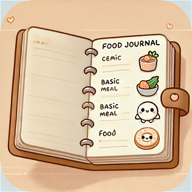
Foodlog - Meal Photo Diary

Foodlog is a food diary built around three meals a day. For breakfast, lunch and dinner you can add a photo, a short description, an estimated calorie count, a star rating and a few tags. The day's total calories are added up for you, and a calendar lets you look back at what you ate on any date.
A photo is often the fastest and most honest way to remember a meal, and a quick note fills in what the picture does not show. That makes Foodlog useful for people who want to notice their eating patterns, remember a dish they loved at a restaurant, keep track of home cooking, or bring a simple record to a conversation with a dietitian.
There is no food database to search and no calorie target to hit. You decide how much detail to record, which keeps logging quick enough to stick with.
The app runs entirely in your browser. What you enter is saved only on this device.
How to use Foodlog
- Pick the day. The Meal Record tab opens on today. Tap the date at the top to choose another day if you are catching up.
- Record a meal. Tap Record Breakfast, Record Lunch or Record Dinner. Add a photo with Take Picture or Select from Gallery, or simply write a description. At least one of the two is required.
- Add details. Enter calories in kcal if you want to track them, give the meal one to five stars, and choose tags such as Homemade, Takeout, Dining Out, Vegetarian or High Protein.
- Edit or delete. Tap a recorded meal to change it or remove it. The day's total calories update automatically.
- Browse the calendar. Open the Calendar tab to see the month of the selected date. Days with a record have a small green dot; tap a day to jump back to its meals. To view another month, change the date on the Meal Record tab first.
- Check your statistics. Tap the statistics icon in the top bar to see total records, average calories, counts by meal type, your most-used tags and your highest-rated meals.
Features
- Separate entries for breakfast, lunch and dinner
- Meal photos from your camera or photo library, stored in the browser
- Free-text meal description
- Optional calorie entry with an automatic daily total
- Five-star rating for each meal
- Ten tags including Homemade, Takeout, Dining Out, Japanese, Western, Chinese, Low Calorie, High Protein, Vegetarian and Vegan
- Monthly calendar that marks the days you logged
- Statistics: totals, average calories, meal type counts, popular tags and top-rated meals
- No account; everything stays in this browser
How to keep a food diary that is actually useful
Record soon, not perfectly
The most common reason food diaries fail is that people try to record everything precisely and give up after a few days. A quick photo taken before you start eating, plus a few words, is enough to jog your memory later. You can always add details such as calories in the evening.
Logging at the time of the meal is also more accurate than reconstructing a day from memory. Snacks, drinks and second helpings are exactly the things that tend to be forgotten by the evening.
What to write in the description
Note what was on the plate and roughly how much, using everyday measures: a fist-sized portion of rice, two slices of toast, a bowl of soup. If it matters to you, mention cooking methods (fried, grilled, steamed) and drinks, which are easy to overlook.
It can also help to jot down context: were you very hungry, eating in a hurry, at your desk, or with friends? Patterns in context often explain more about eating habits than calorie counts do.
Estimating calories
Packaged foods list calories on the label, which makes them easy. For home cooking and restaurant meals, any number is an estimate. Rough comparisons still help: as a general guide, a large restaurant pasta dish can be well over twice the calories of a simple homemade bowl of the same thing, mostly because of oil, cheese and portion size.
Treat calories as one signal among many. Variety, vegetables and fruit, protein, fiber and how full you felt are just as useful to notice.
Using tags and ratings to spot patterns
Tags turn a pile of entries into something you can learn from. After a few weeks, the statistics will show whether takeout is creeping up, how often you cook at home, or how many meals were vegetarian. Star ratings help you remember which home recipes and restaurants are worth repeating.
Review your log once a week rather than every day. Look for one small, realistic change, such as adding a vegetable to lunch, instead of overhauling everything at once.
A note on wellbeing
For some people, detailed tracking can increase anxiety around food. If logging starts to feel stressful or obsessive, take a break. For medical or dietary needs, a registered dietitian or doctor can give advice tailored to you.
Frequently asked questions
Where are my meals and photos stored?
Everything, including photos, is stored only in this browser on this device, with no account. Clearing your browser data deletes it, and nothing syncs to other devices.
Does Foodlog look up calories for me?
No. Calorie values are your own estimates, for example from a package label. The app adds up whatever you enter for each day.
Can I log snacks?
There are slots for breakfast, lunch and dinner. Many people add snacks to the description of the nearest meal.
Does it remind me to log meals?
Not on the web. The iPhone and Android apps can send reminders at your chosen breakfast, lunch and dinner times.
Can I add meals for a past date?
Yes. Tap the date at the top of the Meal Record tab and choose the day you want to fill in.
How else does the phone app differ?
The phone apps save photos on the device and offer meal reminders. The web version keeps photos inside the browser's storage, which can fill up if you add many large images.
Limitations of the web version
- No meal reminder notifications in the browser
- Only breakfast, lunch and dinner slots; no separate snack entry
- No food database or automatic nutrition lookup
- Photos take up browser storage, and clearing site data removes them
- No export or sync between devices
Disclaimer
Calorie values are your own estimates. Foodlog does not provide medical or nutritional advice.
Phone app
Foodlog is also available as an app for phones and tablets:
App Store (iPhone, iPad) Google Play (Android)